
Copyright © 2026. Encyclopedia Celia

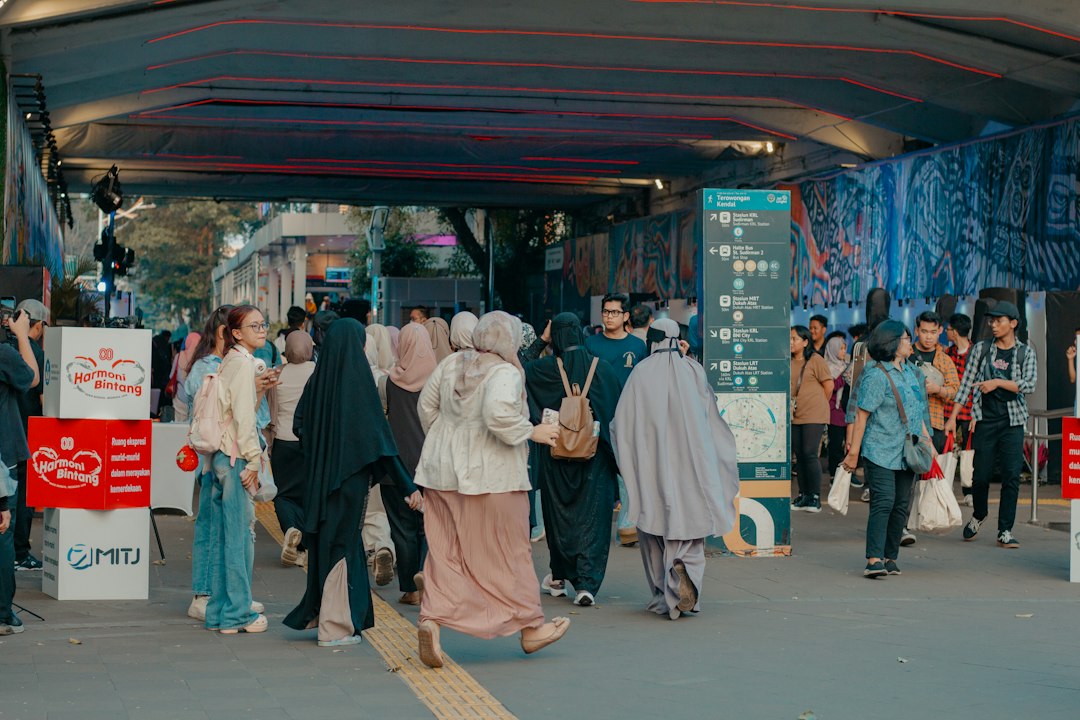
Indonesia celebrates the strength of its people. But what happens when resilience becomes an expectation while the structural conditions that make survival so difficult remain unquestioned?
There is something remarkable about the way people learn to survive.
A mother stretches a limited budget, deciding which needs can wait until payday. A father works additional hours, not necessarily to improve his family’s living standards, but simply to maintain them. A graduate accepts an insecure job because unemployment is a risk they cannot afford.
They continue. They adapt. They sacrifice. And society calls them resilient.
There is nothing inherently wrong with admiring determination. But somewhere between celebrating resilience and accepting hardship, a more difficult question emerges: Why have we become so accustomed to praising people for surviving without asking why survival demands so much from them?
In Indonesia, structural poverty, unequal opportunities, and the limited protection available to some households complicate our familiar stories about hard work. They also challenge how we interpret economic progress.
What Is Structural Poverty—and Why Does It Matter?
Structural poverty refers to poverty sustained or reinforced by barriers within economic, social, and institutional arrangements. These may include unequal access to education and healthcare, limited opportunities for decent work, geographic disparities, and inadequate protection against financial shocks. It is not a claim that individual decisions never matter; it is a recognition that decisions are made under unequal conditions.
Consider two children with comparable potential. One has access to stable housing, reliable healthcare, well-resourced schools, and family financial support. The other grows up where essential services and opportunities are harder to reach. Both may work equally hard. Their starting positions nevertheless shape the risks they can take, the choices they can make, and their capacity to recover from setbacks.
Hard work does not take place in a vacuum. If we judge outcomes while ignoring unequal starting conditions, we risk mistaking advantage for merit—and disadvantage for personal failure.
When Poverty Begins Before Choice
Evidence of inequality can appear long before a person enters the labor market. Research released in November 2025 by Bappenas, Statistics Indonesia (BPS), the SMERU Research Institute, and UNICEF found that 37.4% of Indonesian children—around 29.8 million—experienced multidimensional deprivation, using data from the 2023 national socioeconomic survey. The measure identifies children deprived in at least two dimensions of basic well-being, such as education, health, nutrition, protection, housing, water and sanitation, or information.
This is not the same as saying 37.4% of children live below the monetary poverty line. Monetary poverty and multidimensional deprivation measure different conditions. Both matter if we want to understand the opportunities available to a child.
The same analysis found a striking rural–urban gap: 46.1% of children in rural areas experienced multidimensional deprivation, compared with 30.8% in urban areas. These are 2023 data reported in 2025, not measurements taken in 2026. (UNICEF, 2025.)
A child does not choose where they are born, the quality of the nearest school, or whether the household can withstand a medical emergency. Yet these circumstances can shape possibilities long before adulthood.
None of this means a disadvantaged childhood inevitably leads to poverty. Many people change their circumstances. But exceptional success stories cannot, by themselves, establish that opportunity is equally available to everyone.
Does Poverty Pass from One Generation to the Next?
Intergenerational mobility examines how closely children’s economic or educational outcomes are associated with those of their parents. It helps us distinguish between the possibility of moving up and how accessible that movement is across different families.
Income mobility: what the Indonesian evidence says
In Estimating Intergenerational Income Mobility in Indonesia, Muhammad Imam Adli and Gumilang Aryo Sahadewo (2023) analyzed Indonesian Family Life Survey (IFLS) data and estimated father–son intergenerational income elasticity at 0.44–0.50. This suggests a meaningful association between fathers’ and sons’ incomes in the sample.
Crucially, 0.44–0.50 does not mean that 44–50% of children born poor remain poor. Income elasticity describes a statistical relationship between incomes across generations, not the probability that an individual remains in poverty. It is evidence of persistence, not a verdict on any child’s destiny.
In another IFLS-based analysis, Diding Sakri, Andy Sumner, and Arief Anshory Yusuf (2022) studied 9,445 matched parent–child pairs. They found substantial variation in income mobility across gender, provinces, and generations. Opportunity is not experienced identically throughout Indonesia.
Education can improve without equalizing opportunity
Education offers an important route toward better opportunities, but its effects are not necessarily distributed evenly. Ahsan, Emran, and Shilpi (2024) found that investments in school quality can improve absolute educational mobility for many households while potentially worsening relative mobility. Put simply, many children may attain more education than their parents while gaps connected to family background remain.
The picture becomes more nuanced over longer periods. Cattan, Dalla-Zuanna, Stuhler, and Wong (2026) examined educational mobility across three generations using IFLS and census data. They found greater multigenerational educational mobility in Indonesia than parent–child correlations alone might suggest. Their research also highlights financial constraints, the 1997–1998 Asian financial crisis, and family formation patterns as relevant influences.
These findings resist a simplistic conclusion. Structural disadvantage does not make mobility impossible, and family circumstances do not determine every life. But the existence of mobility does not establish that everyone faces the same path upward.
Many of these studies use historical survey data. Their publication dates should not be confused with a complete measurement of the experiences of young Indonesians in 2026.
Can Indonesia Be Progressing While People Remain Economically Insecure?
Yes. Progress and vulnerability can exist at the same time, because measures of poverty, security, and opportunity answer different questions.
According to BPS (August 2026), the national poverty rate fell to 8.07% in March 2026, from 8.47% in March 2025. That is measurable progress. Yet 22.93 million people remained below Indonesia’s national poverty line.
Being above that line does not automatically imply security against job loss, illness, or an unexpected expense. The World Bank’s 2023 Indonesia Poverty Assessment highlighted low-productivity work, limited access to better jobs, and continued vulnerability to economic shocks. Its historical findings should not be presented as new 2026 measurements, but they help explain why a falling poverty rate need not settle questions about opportunity.
This distinction connects directly to our earlier essay, Who Says Indonesia Is Doing Great?. Statistics are indispensable; so is understanding what they measure and what they leave out. A society can advance on a national indicator while still leaving many households exposed to insecurity.
When Resilience Becomes a Convenient Explanation
When a worker survives prolonged income insecurity, we praise perseverance. When a family manages to live on very little, we celebrate discipline. When a community rebuilds after repeated hardship, we admire solidarity.
These responses may be sincere and deserved. But what disappears when the story ends there?
Why was the worker exposed to such prolonged insecurity? Why did meeting a family’s basic needs require so much sacrifice? Why was a community repeatedly vulnerable to the same risks?
The danger is not that we encourage people to become stronger. It is that we begin using their strength as a reason to expect less from the systems around them.
Financial discipline can help a household, but it cannot create opportunities for decent employment where few exist. Developing new skills matters, but it cannot by itself eliminate unequal access to education. Personal resilience is valuable, but it is not a substitute for functioning institutions, fair opportunities, and effective social protection.
Celebrating endurance without examining its causes can normalize hardship that might otherwise be reduced. That is the moment when the language of resilience becomes politically and morally consequential—even when those using it have no intention of excusing injustice.
Does This Mean Personal Responsibility Does Not Matter?
No. People are not passive products of their circumstances. Decisions, effort, creativity, relationships, and luck all shape outcomes. Acknowledging structural barriers must not erase individual agency.
But the opposite mistake is equally serious. The success of some people from disadvantaged backgrounds does not demonstrate that everyone faced the same opportunities. Nor does the existence of systemic inequality prove that every unsuccessful outcome was caused by it.
Individuals can be responsible for choices within their control. Institutions can be evaluated on whether they expand meaningful opportunities and reduce preventable risks. Those responsibilities can exist together.
Equal opportunity does not guarantee equal outcomes. Unequal opportunity, however, makes it difficult to explain unequal outcomes through effort alone.
Beyond Survival: What Would Progress Look Like?
Perhaps we need better questions. Not only how many people are employed, but how securely they can live. Not only whether a household has crossed the poverty line, but whether it can withstand one unexpected crisis. Not only whether children attend school, but whether the education they receive meaningfully expands their future choices.
No society can eliminate uncertainty, and economic reforms involve trade-offs. But progress can be evaluated through access to effective schools, healthcare, secure and productive employment, functioning social protection, and the ability to plan beyond the next emergency.
A person should not have to possess extraordinary endurance merely to obtain what others experience as an ordinary opportunity.
The Strength We Should No Longer Demand
There will always be difficulties that require resilience. Illness, loss, uncertainty, and unexpected crises are part of human existence. The ability to adapt remains worth respecting.
But resilience should not become an obligation to endure preventable hardship indefinitely.
Indonesia has made measurable economic progress. Recognizing that does not prevent us from asking whether the benefits of progress are distributed fairly enough, or whether the conditions that limit opportunity are changing fast enough.
We can acknowledge personal responsibility while questioning unequal starting conditions. We can admire perseverance without romanticizing suffering. We can celebrate development without confusing survival with security.
A society should not measure its success by how resilient its poorest citizens have become, but by how many barriers it has removed from their path.
Perhaps the greatest achievement of a resilient nation is not producing generations capable of surviving endless hardship. It is creating a future in which survival no longer requires extraordinary strength.
Frequently Asked Questions
What is structural poverty in Indonesia?
Structural poverty is poverty reinforced by unequal access to resources, services, and opportunities—including education, healthcare, decent work, and social protection. It describes barriers that personal effort alone may not overcome.
Does being born into poverty mean a person will remain poor?
No. Research on Indonesian intergenerational mobility shows that upward movement is possible, but outcomes are associated with family background and vary by region, gender, generation, and educational opportunities.
Is resilience a bad thing?
No. Resilience is a valuable capacity to respond to hardship. The concern arises when celebrating resilience distracts from preventable problems or weakens expectations of institutional responsibility.
Does Indonesia’s falling poverty rate mean structural poverty has ended?
No. A declining monetary poverty rate is meaningful progress, but it does not by itself establish equal opportunities, protection against economic shocks, or the absence of multidimensional deprivation.
Sources and Further Reading
- Adli & Sahadewo (2023), Estimating Intergenerational Income Mobility in Indonesia, Jurnal Ekonomi dan Pembangunan.
- Sakri, Sumner & Yusuf (2022), Whose Intergenerational Mobility?, UNU-WIDER.
- Ahsan, Emran & Shilpi (2024), Complementarities and Intergenerational Educational Mobility, Journal of Economic Behavior & Organization.
- Cattan, Dalla-Zuanna, Stuhler & Wong (2026), Educational Mobility Across Multiple Generations in Indonesia, Journal of Development Economics.
- Bappenas, BPS, SMERU & UNICEF (2025), Multidimensional Child Rights Deprivation in Indonesia.
- BPS (2026), Indonesia’s Poverty Profile, March 2026.
- World Bank (2023), Indonesia Poverty Assessment: Pathways Towards Economic Security.
- Featured photograph: Reyhan Aviseno / Unsplash.